


“When you get to the end of the rope, tie a knot and hang on.” – Franklin D. Roosevelt.
There are not any specific tests to diagnose Interstitial Cystitis (IC); however, a healthcare provider will order tests to rule out other infections or conditions. These tests will help your doctor properly diagnose your illness. Your doctor will also obtain a medical history from you. Your provider may ask you to record your symptoms in a diary. They may also ask you to record what you drink, how much you drink and how much you pee. [clevelandclinic.org]
Some tests your doctor may run might include:
Urinalysis (urine test). You’ll provide a pee sample for your provider. They’ll examine your sample with a microscope and look for blood in your pee (hematuria) and signs of an infection, such as organisms, germs, pus or white blood cells. Your provider will prescribe antibiotics to treat any infections. If your pee is sterile weeks or months after treatment and your symptoms remain, your provider may diagnose interstitial cystitis/bladder pain syndrome.
“Most of the important things in the world have been accomplished by people who have kept on trying when there seemed to be no hope at all.” – Dale Carnegie.
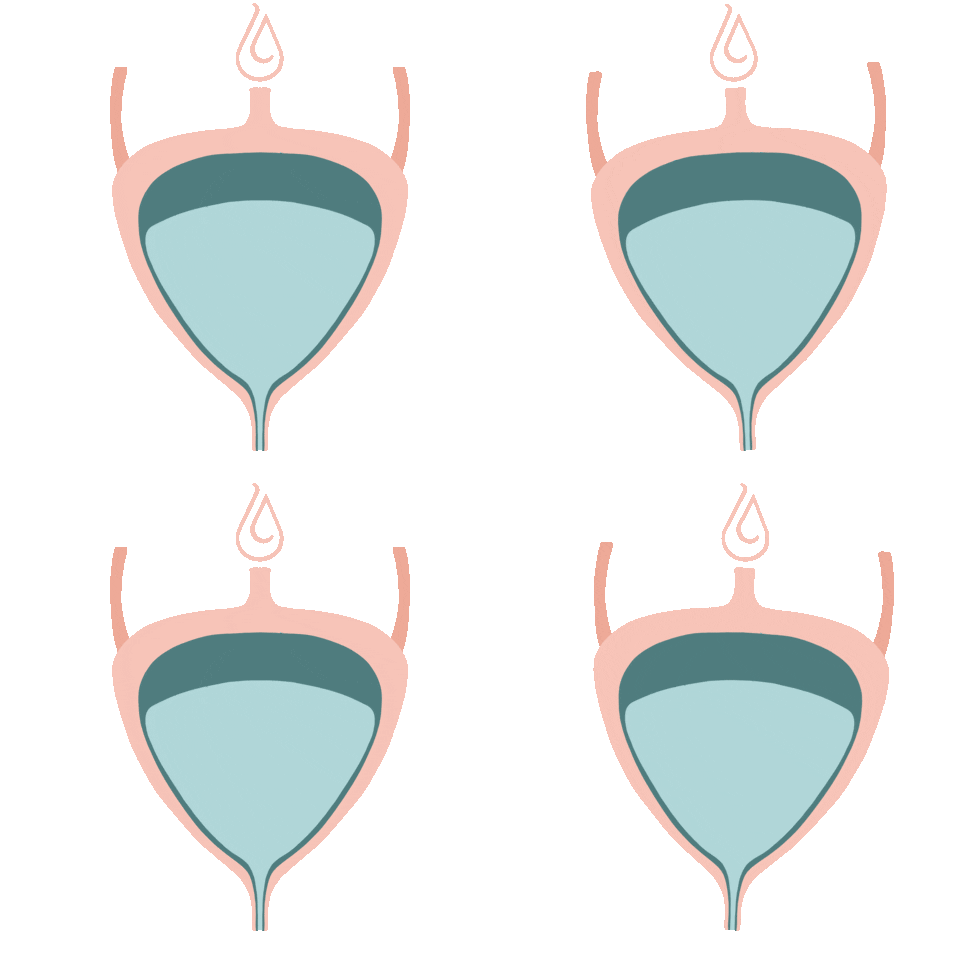
Biopsy. Your provider will first sedate you (put you under) with anesthesia. They’ll then use a thin needle to take a tissue sample of your bladder wall and urethra (the tube through which pee passes out of your body) to rule out other conditions, including bladder cancer.

Cystoscopy. Your provider will examine the inside of your bladder with a cystoscope to help rule out bladder cancer. A cystoscope is a thin, lighted tube with an eyepiece on one end. Your provider will gently insert it into your urethra up to your bladder. They’ll look at your urethra and bladder through the eyepiece. You won’t be under anesthesia during the procedure. However, if your provider orders a bladder biopsy along with a cystoscopy, it may require anesthesia.

Cystoscopy under anesthesia with hydrodistension. Your provider may perform a cystoscopy with bladder hydrodistension (stretching). They’ll perform a cystoscopy and distend (stretch) your bladder as big as possible (maximum capacity) by filling it with water. This procedure may reveal ulcers or cracks in your bladder. It requires anesthesia because bladder distension is painful. Many people have temporary relief of their interstitial cystitis/bladder pain syndrome symptoms after this procedure.
“Most of the important things in the world have been accomplished by people who have kept on trying when there seemed to be no hope at all.” – Dale Carnegie.
 TREATING INTERSTITIAL CYSTITIS